Angle grinders are indispensable tools in construction, metalworking, and DIY projects, prized for their versatility in cutting, grinding, polishing, and sanding. Whether you are a professional or a weekend warrior, the market in 2026 offers a complex array of choices between traditional corded powerhouses and modern, high-tech cordless units.
The Landscape of Consumer Trust
According to the 2026 America’s Most Trusted® Power Tool study, brand reputation remains a critical factor for buyers. For the fifth consecutive year, DeWalt has been identified as the most trusted brand, achieving a Net Trust Quotient Score of 119.7. The rankings, based on over 14,000 consumer opinions, placed Craftsman and Bosch in the second and third spots, respectively. Other major players like Milwaukee, Makita, and Ridgid also maintain high recognition for durability and reliability.
The Corded Powerhouse: Benchmarking Top Models
In rigorous head-to-head performance testing, specialized reviews have identified clear leaders among corded 4.5-inch angle grinders:
- Speed and Power King: The Makita (13-amp) model consistently outperforms the field, making the fastest cuts through rebar in under 3 seconds. It also dominated in maximum torque and working load tests.
- The Best Value: The Ridgid ($60) is frequently cited as the best value proposition, finishing second in cutting speed and offering professional-grade performance at a mid-range price.
- Safety and Braking: Hilti leads in safety features, with the fastest wheel-stop speed at just 3.4 seconds.
- Smooth Operation: For those concerned with user fatigue, Ryobi and Makita offer the lowest tool vibration and the “softest” starts with minimal reaction torque.
Corded vs. Cordless: Choosing the Right Tool in 2026
The debate between corded and cordless models often comes down to the specific task at hand:
- Corded Advantages: These tools offer unlimited runtime and stable power under heavy loads. They are the preferred choice for continuous grinding, deep stone cuts, or fixed workstation use where torque must remain consistent throughout the day.
- Cordless Advantages: Brushless cordless models excel in mobility and convenience, making them ideal for work on rooftops, ladders, or moving between rooms. Surprisingly, brushless cordless tools often exhibit significantly less vibration and heat compared to their “jiggle box” corded counterparts.
- Performance Reality: Advanced cordless setups, such as the Hercules 20V with an 8Ah battery, can actually provide more power (measured in horsepower out) than some standard 7-amp corded models. However, runtime remains a constraint; a 5Ah battery may only provide 7 to 12 minutes of continuous motor runtime under load.
Manufacturing Duel: Chinese vs. American Philosophies
China has become the world’s largest power tool manufacturing base, accounting for 85% of global production. This has led to a distinct split in design philosophy:
Chinese-Produced Models (e.g., KYNKO, Dongcheng, WORX): These brands often focus on affordability and high-volume production. While brands like KYNKO produce industrial-level tools for heavy stone work, many “no-name” Chinese imports are designed for light-to-medium-duty tasks. Experts note that cheaper Chinese models may “cut corners” by using powdered metal gears instead of forged metal, unshielded bearings, and thinner motor windings.
USA-Made/Premium Models (e.g., Milwaukee, DeWalt, Metabo): These are typically built for professional-grade, heavy-duty applications. They often feature advanced vibration control, overload protection, and high-quality electrical components designed for long-term survival under stress.
The Rise of the “High-Value” Hybrid: Hercules
Harbor Freight’s Hercules line represents a middle ground, designed to offer 85-90% of the performance of premium brands like Milwaukee or DeWalt at roughly 60-70% of the cost. Users report that these tools feature reinforced composites and quality bearings that punch well above their price point, making them a favorite for “serious DIYers” and budget-conscious professionals.
Final Buying Advice
When selecting your next grinder, consider your duty cycle:
- If you work in short bursts (under one minute) and need to move around, cordless is the more efficient choice.
- If your day involves hours of continuous grinding, a corded model from a trusted brand like DeWalt or Makita is a necessary investment to avoid constant battery swapping and heat fade.
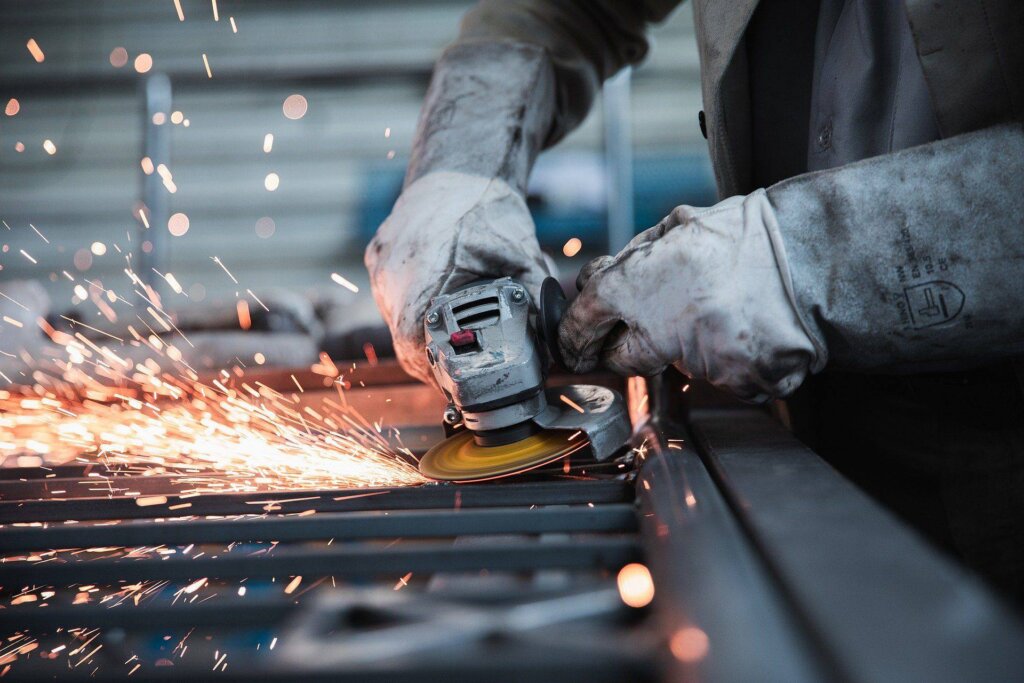
- Always prioritize safety gear, as these tools remove material—and human tissue—with “spectacular efficiency”. Face shields, hearing protection, and heavy-duty gloves are non-negotiable.