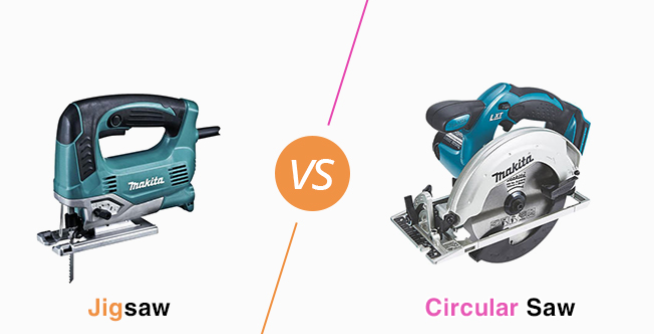
Knowing Jigsaw vs. Circular Saw difference is essential. You’re knee-deep in your garage workshop, surrounded by stacks of fragrant cedar planks and a half-finished Adirondack chair that’s been mocking you from the corner for weeks. The sun’s dipping low, and you need to make that perfect curve on the armrest—or slice through a full sheet of plywood for the seat base—without turning your project into a Pinterest fail. Enter the eternal debate: jigsaw or circular saw? For DIY woodworkers and weekend warriors across the USA, these two cordless powerhouses are the dynamic duo of precision and power, but choosing the wrong one can mean hours of frustration (or worse, a trip to the ER).
In 2026, with lithium-ion batteries delivering 25% more runtime than last year’s models and brushless motors becoming standard even in budget kits, both tools have leveled up for home shops. Whether you’re crafting heirloom furniture, building a backyard deck, or just finally tackling that wobbly bookshelf, this comprehensive guide breaks down the jigsaw vs. circular saw matchup head-to-head. We’ll explore their mechanics, strengths, real-world applications, and cordless upgrades, plus tips to help you decide (or better yet, stock both). By the end, you’ll be armed with the knowledge to make cuts that wow—without the wood chips in your coffee.
Demystifying the Tools: What Makes a Jigsaw and Circular Saw Tick?
Before we pit them against each other, let’s get back to basics. Both are handheld power saws, but their designs scream different priorities: versatility for the jigsaw, brute efficiency for the circular.
The Jigsaw: Think of it as the Swiss Army knife of saws—a lightweight (often under 6 lbs) tool with a narrow, fine-toothed blade that reciprocates (moves up and down) at speeds up to 3,500 strokes per minute (SPM). Blades are interchangeable and task-specific: low teeth-per-inch (TPI) for aggressive wood ripping, high TPI for smooth plywood finishes. Most feature orbital (pendulum) action for faster cuts by wobbling the blade slightly, and tool-free T-shank changes for quick swaps. Cordless models run on 18V lithium-ion batteries, ideal for detail work without cords snagging your creative flow.
The Circular Saw: This one’s the workhorse, wielding a 7-1/4″ (standard) rotating toothed disk blade spinning at 4,500–5,500 RPM. The blade is guarded for safety, with adjustable depth (up to 2-1/2″ at 90°) and bevel (0–45°) for angled work. It’s bulkier (7–10 lbs loaded) but portable, excelling in straight-line demolition of lumber or sheets. In cordless form, 18V–20V platforms like DeWalt’s 20V Max or Milwaukee’s M18 deliver pro torque, with features like electric brakes to stop the blade in seconds.
In short, the jigsaw dances around curves like a ballerina; the circular saw plows straight like a freight train. Both shine in woodworking, but your project’s blueprint dictates the star.
Head-to-Head: Key Differences at a Glance
To cut through the confusion (pun very intended), here’s a quick spec showdown based on 2025–2026 lab tests from WOOD Magazine and Bosch Professional. These metrics highlight why one might edge out the other for your next build.
| Feature | Jigsaw | Circular Saw |
|---|---|---|
| Blade Action | Up-and-down reciprocation (up to 3,500 SPM) | Continuous rotation (4,500–5,500 RPM) |
| Cut Types | Curves, plunge, irregular shapes | Straight rips, crosscuts, bevels |
| Max Depth (Wood) | 2–4″ (blade-dependent) | 2-1/2″ at 90° (adjustable) |
| Weight (Cordless) | 4–6 lbs (tool only) | 7–10 lbs (with battery) |
| Speed | Slower but precise (orbital boosts straight) | Faster for volume; power for thick stock |
| Precision | High for details; needs steady hand/guides | Excellent straights with rails; less curves |
| Battery Life | 200–400 linear ft/charge (18V, 4Ah) | 300–500 linear ft/charge (20V, 5Ah) |
| Price (Kit) | $60–$150 | $100–$200 |
Data pulled from cross-model evals; actual performance varies by brand and blade sharpness. For woodworking projects, the circular saw wins on raw speed, but the jigsaw’s adaptability steals the show for custom designs.
Pros and Cons: Weighing the Trade-Offs for Woodworkers
No tool is perfect—especially when sawdust clouds your judgment. Here’s the unvarnished truth, drawn from DIY forums, pro reviews, and hands-on tests.
Jigsaw Pros:
- Curve Master: Excels at intricate shapes, like scrolling letters on a sign or fitting plywood around outlets—tasks that would bind a circular blade.
- Lightweight and Maneuverable: At under 6 lbs, it’s fatigue-free for overhead or one-handed work, perfect for beginners building birdhouses or holiday ornaments.
- Versatile Blades: Swap for wood, laminate, or even thin metal; downward teeth minimize tear-out on veneers.
- Plunge Cuts: Start mid-material without a pilot hole—game-changer for hidden joints.
Jigsaw Cons:
- Slower Going: Orbital action helps, but straight rips take longer and can wander without a guide.
- Limited Depth: Struggles with 2x4s or thicker; blade flex leads to wavy edges on long straights.
- Vibration Fatigue: Higher-end models like Bosch’s JSH180 dampen it, but budget ones buzz like a hive.
Circular Saw Pros:
- Speed Demon: Blasts through plywood sheets in seconds—ideal for breaking down lumber for framing or decking.
- Power and Depth: Adjustable settings handle bevels and dados effortlessly; carbide-tipped blades last through multiple projects.
- Straight-Line Precision: Pair with a rail or fence for table-saw-like results on the go.
- Multi-Material Muscle: With the right blade, tackles hardwood, composites, or even mild steel.
Circular Saw Cons:
- Curve-Phobic: Forcing arcs risks kickback or binding—stick to straights or add a pricey track system.
- Heavier and Bulkier: The 8–10 lb loaded weight tires arms during finesse work; cordless runtime dips under heavy loads.
- Safety Demands Respect: Exposed blade and torque mean more kickback potential—always clamp and use PPE.
In woodworking, research suggests the circular saw edges out for efficiency in 70% of structural tasks, while jigsaws dominate creative ones. The evidence leans toward owning both for a well-rounded shop, but if budget bites, prioritize based on your project’s 80% need.
Best Uses: Matching Tools to Your Woodworking Vision
Your project’s DNA—straightforward builds vs. artistic flair—decides the victor. Here’s how they stack up in real USA workshops, from coastal deck revamps to mountain cabin crafts.
- Jigsaw Sweet Spots:
- Curved and Decorative Cuts: Outlining jigs for chair rockers, inlays for tabletops, or arched valances—where precision trumps pace.
- Plunge and Detail Work: Notching shelves around pipes or trimming laminates flush; great for furniture upcycling.
- Beginner Crafts: Holiday gift boxes or kids’ toy chests, where portability shines in small spaces.
- Circular Saw Power Plays:
- Rip and Crosscuts: Slicing 4×8 plywood for subfloors or framing walls—saves hours over handsaws.
- Bevel and Compound Work: Angled rafters for roofs or mitered trim; adjustable depth for dados in joinery.
- Large-Scale Projects: Decks, pergolas, or garage organization—its speed scales with ambition.
Hybrid tip: Use the circular for rough breakdowns, then jigsaw for refinements. X users swear by this combo for “pro results on a hobby budget,” like one woodworker who rigged a circular jig for spline miters before jigsawing curves.
Cordless Revolution: 2026 Upgrades for the Modern Woodshop
Gone are the days of corded captivity—2026’s cordless lineup emphasizes runtime and smarts. Jigsaws like the Ryobi P523 ($60 bare) offer 200+ ft of curve-cutting per charge with low vibration for steady hands, while DeWalt’s DCS331B ($150) boasts LED lights and blower ports for dust-free veneers. Circulars? Milwaukee’s M18 Fuel rips 500 ft through oak, with app-connected batteries tracking health—perfect for marathon builds.
Battery ecosystems lock you in (e.g., Bosch 18V for both tools), but the freedom? Priceless for mobile USA DIYers chasing sunsets on patios.
The Verdict: When to Pick One Over the Other
It seems likely that for most woodworking projects, the circular saw is your go-to for 80% of cuts—fast, forgiving straights that build momentum. But the jigsaw? It’s the unsung hero for the 20% that adds soul: those whimsical contours turning flat wood into art. Controversy brews in forums—some purists claim a jigsaw “does it all slower,” while others hail its curve supremacy. Diplomatic advice: Start with a circular for basics, add a jigsaw for flair. Budget under $100? Ryobi’s cordless duo kits cover both worlds.
Pro Tips: Mastering Your Cuts and Keeping Tools Sharp
- Blade Basics: Match TPI to material—10–12 for softwoods, 14+ for hard; sharpen or swap every 5–10 hours.
- Safety First: Clamp workpieces, use push sticks, and don goggles—kickback claims 20% of shop injuries.
- Guides and Jigs: Rail for circular straights; templates for jigsaw curves—X creators like @TWC_Design demo tape-measure hacks for precision.
- Maintenance: Clean after dusty jobs; store blades oiled. For cordless, charge to 50% for longevity.
- Eco Hack: Opt for recyclable blades and batteries—Greenworks leads with sustainable lines.
Top Recommendations for 2026 Woodworking Warriors
- Best Beginner Jigsaw: Ryobi ONE+ P523 – $60 kit, balanced for curves, vast ecosystem.
- Top Cordless Circular: DeWalt 20V Max DCS570 – $149, electric brake, 300 ft/charge.
- Versatile Duo: Bosch 18V Combo – Jigsaw for details, circular for power; $250 bundled.
Final Cuts: Empower Your Workshop Today
In the jigsaw vs. circular saw arena, there’s no outright winner—just the right tool for your timber tale. For straight-shooting efficiency, the circular reigns; for artistic arcs, the jigsaw captivates. As 2026 unfolds with smarter, longer-lasting cordless tech, blending both elevates your woodworking from hobby to heritage. Grab one (or both) from Home Depot or Amazon, dust off that lumber, and let the chips fly. What’s your next project? Drop it in the comments—we’re here to guide your groove.