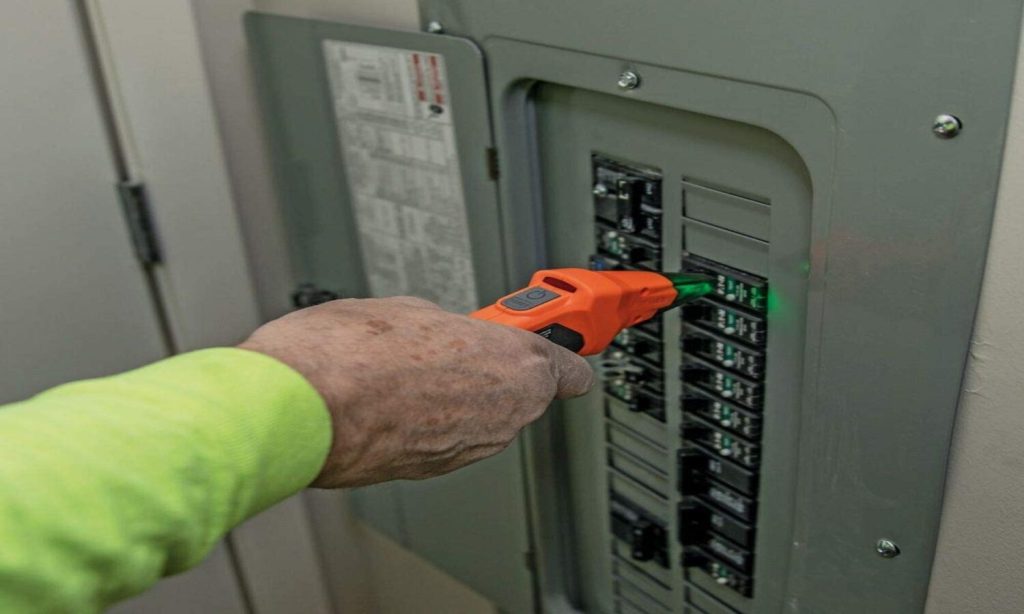
A tripped circuit breaker is one of the most common electrical issues homeowners face. When a breaker trips, it cuts power to a specific part of your home — protecting your wiring and appliances from overloads, shorts, or hazards. But a breaker that trips often isn’t just an inconvenience — it’s your electrical system signaling a problem you shouldn’t ignore.
In this guide, we’ll walk through:
- What a tripped breaker is
- How to safely reset it
- Troubleshooting to find the real cause
- Safety tips and warning signs
- When to call a licensed electrician
What It Means When a Breaker Trips
Your home’s electrical panel is like a traffic control system for power. Circuit breakers protect wiring by shutting off electricity when something goes wrong:
📍 Common Causes of a Tripped Breaker
- Overloaded Circuit — Too many appliances drawing more current than the circuit can handle.
- Short Circuit — A hot wire touches a neutral or ground wire, creating a surge that trips the breaker.
- Ground Fault — Current flowing where it shouldn’t, often near moisture.
- Faulty Appliance or Wiring — A damaged device or cable drawing abnormal current.
Breakers trip on purpose — it’s their job to protect your home and prevent fires. A one‑time trip might just mean you overloaded that circuit; frequent tripping means deeper investigation is needed.
Step‑by‑Step: Fixing a Tripped Breaker
⚠️ Safety First: Always ensure your hands are dry, footwear is non‑conductive, and you’re not standing on a wet surface before accessing your panel. Electricity and moisture are a dangerous combo.
✔️ Step 1 — Locate Your Breaker Panel
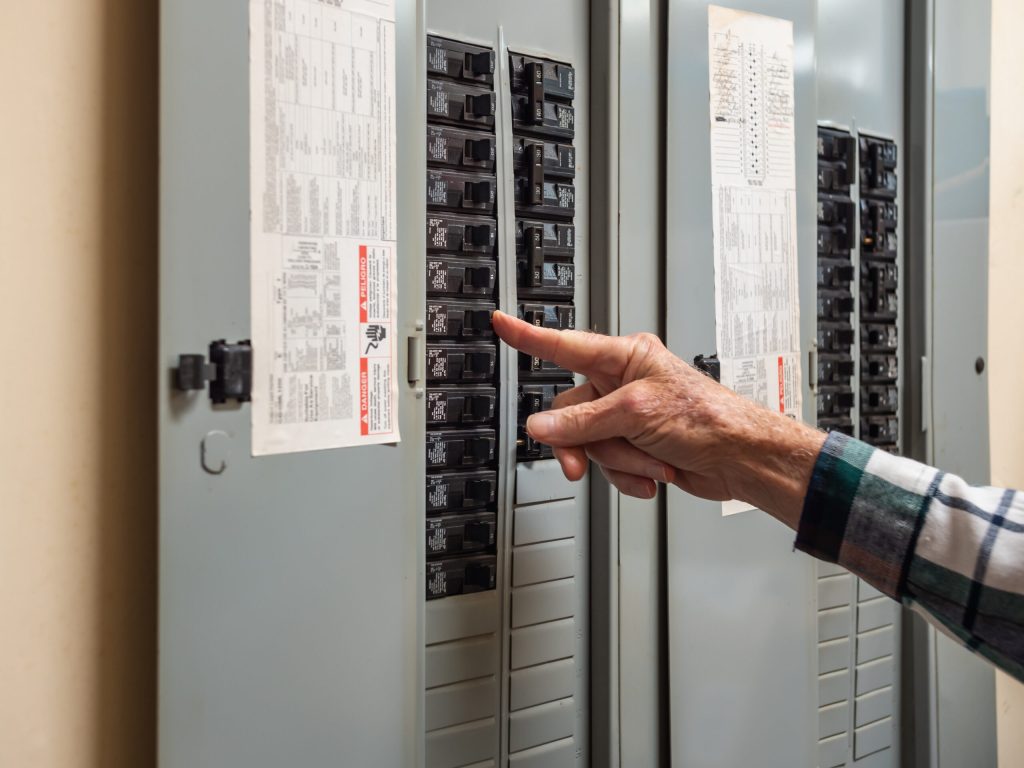
The breaker panel is usually in a basement, garage, utility room, or closet. Open the panel door to see all breaker switches.
✔️ Step 2 — Identify the Tripped Breaker
A tripped breaker is either:
- In a middle position — between ON and OFF
- Fully OFF
- Showing a red or orange indicator
These indicators help you find the problem quickly.
✔️ Step 3 — Turn Off or Unplug All Devices on That Circuit
Unplug lamps, appliances, chargers, or tools on that circuit. This reduces load and prevents the breaker from tripping again the moment you reset it.
✔️ Step 4 — Reset the Breaker
- Firmly push the breaker to OFF
- Then flip it to ON
You should feel a click; that means the breaker has been reset.
✔️ Step 5 — Check Power and Test
Restore power to lights or one appliance at a time — starting with low‑power devices. If everything stays on, you’ve likely resolved a simple overload.
Troubleshooting: What If It Trips Again?
Sometimes resetting isn’t enough. If the breaker trips immediately or repeatedly, identify why:
🔍 Test Appliances One at a Time
Plug devices back in one at a time. If the breaker trips when a specific appliance is powered, that device may be faulty.
🔧 Overload vs. Short vs. Ground Fault
- Overload: Happens when many devices run at once on one circuit.
- Short Circuit: Caused by wires touching or damaged wiring — dangerous and needs professional inspection.
- Ground Fault: Often in kitchens/bathrooms where moisture contacts wiring; GFCI outlets help prevent these.
🚨 Signs You Need a Professional
- Breaker trips even when nothing is plugged in
- You smell burning or see scorch marks
- Breaker won’t stay in the ON position
These can indicate serious wiring problems requiring a licensed electrician.
Preventing Future Breaker Trips
Once you’ve fixed the immediate problem, take steps to avoid recurrence:
🧠 Reduce Circuit Load
Don’t plug too many high‑power devices (space heaters, air fryers) into one circuit. Spread them across multiple outlets if possible.
🔄 Regular Panel Inspections
Have a professional electrician inspect your panel periodically to catch wear, corrosion, or loose connections early.
⚡ Use Dedicated Circuits
High‑draw appliances (HVAC, dryers, EV chargers) need their own dedicated circuit to prevent overloads.
When to Call an Electrician
Some issues are beyond safe DIY handling:
✔ The breaker keeps tripping despite troubleshooting
✔ There are signs of damaged wiring
✔ You notice overheating, buzzing sounds, or burning smells
✔ You’re unsure what’s causing the problem
A licensed electrician has the tools and knowledge to diagnose wiring issues, fix shorts or ground faults, and ensure your system meets code — protecting your home and family.
Conclusion — Master the Basics, Know Your Limits
Fixing a tripped breaker can be straightforward: identify the tripped switch, reset it safely, and troubleshoot your devices and load. But breakers don’t trip for no reason — and repeated tripping is a signal of electrical stress in your home.
Use this guide to empower yourself with knowledge — and when a problem feels beyond your comfort zone, reach out to a professional. Safety first, always.
FAQs
Q1: Why won’t my breaker stay on after resetting?
If it trips immediately after resetting, there’s likely a short circuit or wiring fault that needs professional inspection.
Q2: Can a faulty appliance cause breaker trips?
Yes — a defective device can draw irregular current and trip the breaker. Test unplugged circuits to isolate it.
Q3: Is repeatedly resetting a breaker safe?
No — if it keeps tripping, don’t force it. Frequent tripping indicates a deeper problem.