The angle grinder remains the undisputed champion of the American workshop, jobsite, and fabrication shop. Its versatility is unmatched, but its true power is unlocked only when paired with the right cutting disc. As we move through 2026, the market for metal cutting discs is more advanced—and more confusing—than ever. From new composite materials to AI-optimized grit patterns, the humble cutting wheel has undergone a quiet revolution.
This comprehensive guide cuts through the marketing hype to bring you a detailed look at the best metal cutting discs available in the USA for 2026, helping you choose the perfect blade for your project, budget, and safety.
The Cutting Edge: Understanding Disc Types in 2026
Gone are the days of one disc for all jobs. Today’s selection is specialized, engineered for peak performance in specific applications.
The Reinforced Resinoid Abrasive Disc (The Workhorse)
This is your standard, go-to cutting disc. A matrix of abrasive grains (typically aluminum oxide or zirconia alumina) is bonded with a resin and reinforced with fiberglass mesh for strength and safety.
Best For: General-purpose cutting of mild steel, rebar, angle iron, bolts, and sheet metal.
2026 Advancements: Look for discs with “graded density” or “progressive bond” technology. These feature a tougher bond at the hub for stability and a more aggressive, free-cutting bond at the rim, reducing heat and loading. Grain formulations are also more precise, with blends like ceramic-enhanced aluminum oxide offering longer life on harder steels.
Diamond Blades: The Long-Distance Runners
No longer just for masonry, segmented diamond blades designed for metal have taken a massive leap forward. These blades feature diamond grit embedded in a steel matrix, with segments to dissipate heat.
Best For: Repetitive cutting of the same material—think production shops cutting stacks of sheet metal, conduit, or aluminum extrusion. They excel on non-ferrous metals (aluminum, copper), stainless steel (with a dedicated blade), and cast iron.
2026 Advancements: Material-specific matrixes are key. A blade for abrasive materials like cast iron uses a softer metal matrix to wear and expose new diamond, while a blade for stringy aluminum uses a harder matrix. Laser-welded segments are now the standard for premium blades, offering unparalleled durability over older sintered methods.
Carbide-Tipped Circular Saw Blades (The Clean Cutters)
These look like a wood-cutting blade but feature carbide teeth designed for metal. They make a noticeable comeback in 2026 for specific applications.
Best For: Delivering clean, burr-minimized cuts on thin-gauge sheet metal, aluminum siding, roofing, and ductwork. They produce less spark and can be faster than abrasive discs on thin materials.
2026 Insight: The rise of compact cordless angle grinders (like the Milwaukee M18 Fuel or DeWalt XR) has driven demand for these blades, as they place less strain on batteries than grinding through metal with an abrasive wheel.
Specialty & Composite Discs
Stainless Steel Specific Discs: Crucially important in 2026. These use inorganic materials like aluminum silicate in the bond and are labeled as “LOW-Fe” or “Iron-Free.” This prevents contamination (rouging) of the stainless surface, which can compromise its corrosion resistance. A must-have for any food service, marine, or architectural metalwork.
Composite Cutting Wheels: A hybrid design featuring a resinoid abrasive edge bonded to a reinforced fiberglass center. They are thinner for faster cutting and more resistant to bending/breaking than standard discs.
Key Selection Criteria for 2026
Choosing the right disc involves more than just grabbing the cheapest 4.5″ pack. Consider these factors:
Material: Match the disc to your metal. Mild steel, stainless, aluminum, and cast iron all have ideal disc types.
Diameter & Arbor Size: 4.5″ (115mm) is the universal size for handheld grinders. 6″ and 7″ are for larger stationary tasks. Ensure the arbor hole (typically 7/8″ or 22.23mm) fits your grinder spindle.
Thickness: Thinner discs (0.045″ / 1.2mm) cut faster with less material waste but are more fragile. Thicker discs (0.125″ / 3.2mm) are more durable for rough, off-angle cutting.
RPM Rating: THIS IS NON-NEGOTIABLE. The disc’s MAX RPM must meet or exceed your grinder’s no-load RPM. Using an under-rated disc is extremely dangerous.
Safety Standards: Look for the ANSI B7.1 and OSHA markings. High-quality discs will have a full product information label, not just a stamp.
The 2026 Top Picks: Best Metal Cutting Discs by Category
Based on performance, innovation, availability, and user feedback, here are the standout discs for the USA market in 2026.
Best Overall & Premium Performance: Walter Flex-Cut Premium
Walter has consistently pushed the envelope, and their 2026 Flex-Cut line remains a benchmark. Featuring a progressive bond system and TG612 zirconia alumina grain, these discs offer an exceptional balance of cut speed, life, and smooth operation. They run cooler, resist loading, and their consistent performance across a wide range of steels justifies their premium price for professionals.
Key Tech: Progressive Bond, TG612 Grain.
Ideal User: Fabricators, metalworkers, and serious DIYers who value time and performance over upfront cost.
Best Value & Daily Driver: DeWalt Ultra-Thin Metal Cutting Disc
A perennial favorite that continues to dominate the value-for-money category. Available everywhere from Home Depot to local suppliers, these discs offer reliable, predictable performance. The Diamond-coat grain matrix provides a long life, and the thin design cuts quickly with minimal drag. For general shop and construction use on mild steel, it’s incredibly hard to beat.
Key Tech: Diamond Coat Matrix, Thin Kerf.
Ideal User: Contractors, maintenance crews, and weekend warriors needing a reliable, affordable, and readily available disc.
Best for Stainless Steel & Non-Ferrous: PFERD CUTTING DISC LAMINATED ST-S
When the job demands a contamination-free cut on stainless or a smooth cut on aluminum, PFERD’s ST-S series is the gold standard. The laminated construction provides incredible burst resistance and smooth cutting action. Their iron-free formulation for stainless is trusted in the most critical applications. For non-ferrous metals, their specialized discs resist loading and melting.
Key Tech: Laminated Safety Design, Iron-Free (Low-Fe) Bonds.
Ideal User: Welders working with stainless, HVAC technicians, marine fabricators, and food equipment manufacturers.
Best Diamond Blade for Metal: Diablo Steel Demon Durable
Diablo’s innovation in the diamond segment space has been impressive. The Steel Demon Durable features a patented multi-material segment with a diamond matrix specifically formulated for long life on rebar, angle iron, and sheet metal. The vibration-dampening expansion slots make for a smoother, quieter cut than traditional abrasive wheels on repetitive jobs.
Key Tech: Material-Specific Diamond Matrix, Vibration Dampening.
Ideal User: Rebar tiers, metal framing crews, and anyone doing high-volume cutting of the same ferrous material.
Best for Precision & Clean Cuts: Makita A-95777 Metal Cutting Wheel
Makita’s foray into ultra-thin, high-precision cutting wheels has been a success. At only 1.0mm thick, this disc is designed for clean, accurate cuts with minimal burr. It’s excellent for detailed metal art, automotive panel work, or any project where the cut line matters as much as the speed.
Key Tech: Ultra-Thin 1.0mm Design, Precision-Graded Abrasive.
Ideal User: Automotive restorers, metal artists, and craftspeople requiring fine, controlled cuts.
Safety & Best Practices in the Modern Age (2026 Edition)
The best disc is useless without safe operation. The core principles remain, but modern tools offer new safeguards.
PPE is Non-Optional: A faceshield over safety glasses, hearing protection, and heavy-duty gloves are the bare minimum. Consider FR (Flame-Resistant) clothing for extensive work.
Use the Guard: Always. Modern grinder guards are more adjustable and less obstructive than ever. Use them.
Inspect Before Use: Check for cracks, damage, or expired dates (yes, resinoid discs have a shelf life). Never use a damaged disc.
Allow the Tool to Work: Let the disc’s speed and abrasiveness do the cutting. Applying excessive pressure causes heat, wear, and potential failure.
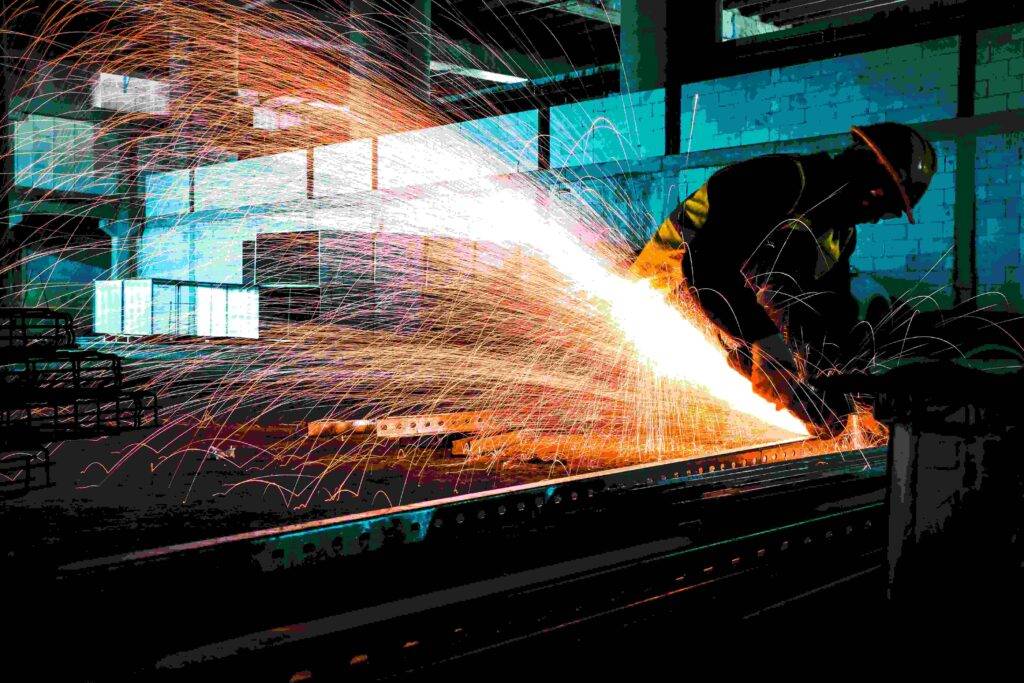
Mind the Spark Stream: Always position the grinder so the sparks fly away from you, others, and flammable materials. New spark-deflection guards are available as accessories.
Embrace New Safety Tech: Consider grinders with active reaction systems (like Bosch’s KickBack Control) and disc brakes. Use quick-change systems (like Metabo’s X-LOCK) to minimize time spent handling the spindle nut.
The Future is Here: What’s Next?
As we look beyond 2026, trends point towards smart abrasives with embedded tracers for wear detection, even more bio-friendly and recyclable bonds, and discs optimized for the torque and speed curves of advanced brushless motors in cordless tools.
Final Cut
The “best” angle grinder metal cutting disc in 2026 isn’t a single product—it’s the right tool for the job. For the professional fabricator, the Walter Flex-Cut represents peak abrasive technology. For the all-purpose user, the DeWalt disc delivers unmatched value. For stainless, PFERD is in a class of its own.
Investing in the correct, high-quality disc isn’t just about a better cut; it’s about efficiency, finish, and most importantly, safety. By understanding the options and matching them to your work, you ensure that every cut you make is a clean, fast, and safe one.