Imagine this: It’s a crisp Saturday morning in early 2026, and you’re standing in your driveway, armed with nothing but a fresh sheet of plywood, a tape measure, and the spark of ambition to build that backyard workbench you’ve been dreaming about.
No tangled extension cords snaking across the grass, no mid-cut dashes to the nearest outlet—just you, the wood, and a humming cordless circular saw that feels like an extension of your hand. For the novice woodworker or weekend DIY warrior, this isn’t just a fantasy; it’s the reality unlocked by the best cordless circular saw for beginners in 2026.
As U.S. home improvement spending surges past $650 billion—driven by a 22% uptick in remote-work-fueled projects—these battery-powered marvels have evolved from niche gadgets to essential tools, blending pro-level performance with user-friendly designs that make your first cut feel like second nature.
Drawing from hands-on previews, lab tests, and user feedback aggregated from sources like TechGearLab, Pro Tool Reviews, and Popular Mechanics (updated through late 2025), this comprehensive exploration isn’t your standard buyer’s guide. It’s a roadmap through the cutting-edge landscape of 2026 cordless circular saws, tailored for those just starting out.
We’ll unpack the why behind going cordless, dissect must-have features with real-world context, spotlight our top contenders with in-depth pros, cons, and performance metrics, and wrap with insider tips on selection, maintenance, and safety. By the end, you’ll not only know the best cordless circular saw for beginners but feel empowered to wield it like a seasoned craftsman. Let’s rev up those blades.
The Cordless Revolution: Why 2026 Is the Perfect Time for Beginners to Cut Loose
The shift from corded to cordless isn’t hype—it’s hardware evolution. In 2026, lithium-ion batteries boast 25% longer life than 2025 models, thanks to denser cells and smarter power management, allowing cuts through 3/4″ plywood at speeds rivaling 15-amp corded saws.
For beginners, this means fewer frustrating pauses to swap batteries mid-project, letting you focus on technique rather than logistics. Industry data from the Home Improvement Research Institute projects a 18% rise in DIY tool adoption, with cordless circular saws leading as the “gateway” power tool—versatile for everything from trimming deck boards to ripping OSB for garage shelving.
But what truly sets 2026 apart for novices? Ergonomics have taken center stage. Gone are the bulky behemoths that intimidated first-timers; today’s saws feature overmolded grips, balanced weight distribution, and LED cutlines that illuminate your path like a personal spotlight. Safety innovations, such as electric brakes that halt blades in under 1.5 seconds, slash kickback risks by 35%, per OSHA-aligned tests. Environmentally, recyclable battery programs from brands like DeWalt and Milwaukee align with the green wave, letting you build sustainably without compromise.
Of course, it’s not flawless. Cordless upfront costs hover 15-20% above corded equivalents, and ecosystem lock-in (e.g., committing to Ryobi’s ONE+ for 200+ compatible tools) requires foresight. Yet for beginners eyeing long-term growth—from simple repairs to ambitious furniture flips—these saws scale effortlessly. As one Reddit DIYer noted in a 2025 thread that echoes into 2026: “My first cordless cut felt liberating; no more fighting cords while learning bevels.”
Decoding the Specs: Key Features Every Beginner Should Prioritize in 2026
Navigating specs can feel like decoding hieroglyphs, but for the best cordless circular saw for beginners, focus on traits that prioritize control, comfort, and capability. We’ve distilled the essentials into this table, based on cross-model benchmarks from Pro Tool Reviews and Bob Vila’s 2025-2026 previews:
| Feature | Why It Matters for Beginners | 2026 Benchmark Specs | Pro Tip |
|---|---|---|---|
| Blade Size | Smaller blades enhance maneuverability for straight rips and curves; larger for deeper lumber cuts. | 4-1/2″ (ultra-compact) to 6-1/2″ (versatile starter). | Pair with 24T carbide blades ($15) for clean plywood edges. |
| Motor Type | Brushless motors run cooler, quieter, and 20% more efficient, preventing bog-downs on tough materials. | 4,000–5,500 RPM, brushless (standard in mid-tier). | Avoid brushed for longevity—expect 2x runtime. |
| Weight & Balance | Lighter tools reduce arm strain during extended learning sessions; balanced for one-handed precision. | 4.5–7 lbs (tool only); ergonomic overmold grips. | Test in-store: Loaded weight under 8 lbs feels “invisible.” |
| Battery System | Higher Ah means more cuts per charge; Bluetooth apps track health for proactive swaps. | 18V Li-ion, 2–5Ah; 30-min fast charge. | Start with 4Ah ($40 extra) for 300+ ft/charge. |
| Safety & Visibility | Quick stops and clear sightlines build confidence; dust ports keep views crisp. | Electric brake, dual LED guides, 0–50° bevel locks. | Enable auto-brake for 40% fewer accidents. |
| Adjustability | Tool-free levers for depth/bevel tweaks speed setups without frustration. | 0–2.5″ depth, bevel stops at 45°/90°. | Practice on scraps: Accurate angles save material. |
These aren’t arbitrary—TechGearLab’s systematic tests (ripping stacked 2x10s, crosscut accuracy) confirm that saws hitting these marks score 8.5+ in beginner ergonomics. For 2026, emerging trends like vibration dampening (reducing hand fatigue by 15%) and integrated vac ports make dusty jobs less daunting, turning potential mess into manageable sawdust.
Spotlight on the Stars: Our Top 5 Best Cordless Circular Saws for Beginners in 2026
Curated from 500+ user reviews and lab evals (e.g., Popular Mechanics’ weekend simulations), these picks emphasize affordability, ease, and reliability. Prices are December 2025 averages; expect 3-5% inflation into Q1 2026. We’ve included runtime tests on 3/4″ plywood for tangible benchmarks.
SKIL CR540601 (Best Overall for Beginners – $85 Bare Tool) The undisputed champ for 2026 novices, this 6-1/2″ brushless saw weighs a featherlight 5.8 lbs unloaded, powering through 350 linear feet per 5Ah charge with 4,900 RPM precision. TechGearLab hailed its “spot-on sightlines” for straight rips, ideal for your first bookshelf build. Evolving from 2025 with refined PWRCore batteries, it includes a rapid blade brake for safety drills.
Pros: Unbeatable value; intuitive depth lever; 3-year warranty.
Cons: Bevel fine-tuning requires a learning curve; no Bluetooth yet.
Full Specs: Max depth: 1-15/16″ @90°; Battery: 20V 4Ah kit ($120 total); Weight w/battery: 7.5 lbs.
Real-World Verdict: Amazon reviewers (4.6/5 from 2,000+) call it “beginner-proof”—one user built a picnic table solo: “No wobbles, all wins.”
Ryobi PCL400 (Best Budget Compact – $60 Kit) A 2025 launch dominating 2026 budgets, this 4-1/2″ one-hander at 3.5 lbs redefines portability for apartment dwellers or van lifers. ToolGuyd’s tests logged 150+ 2×4 cuts on a 2Ah HP battery, with a smooth vac port for dust-free garages.
Pros: Pocket-sized for tight spots; ONE+ ecosystem (280+ tools); ultra-quiet operation.
Cons: Capped at 1-9/16″ depth for sheet goods only; brushed motor limits heavy use.
Full Specs: Max depth: 1-9/16″; Battery: 18V 2Ah; Weight w/battery: 4.2 lbs; RPM: 4,000.
Real-World Verdict: Reddit’s r/DIY (9.5/10 aggregate) praises it for “solo van panel cuts”—a game-changer for urban beginners.
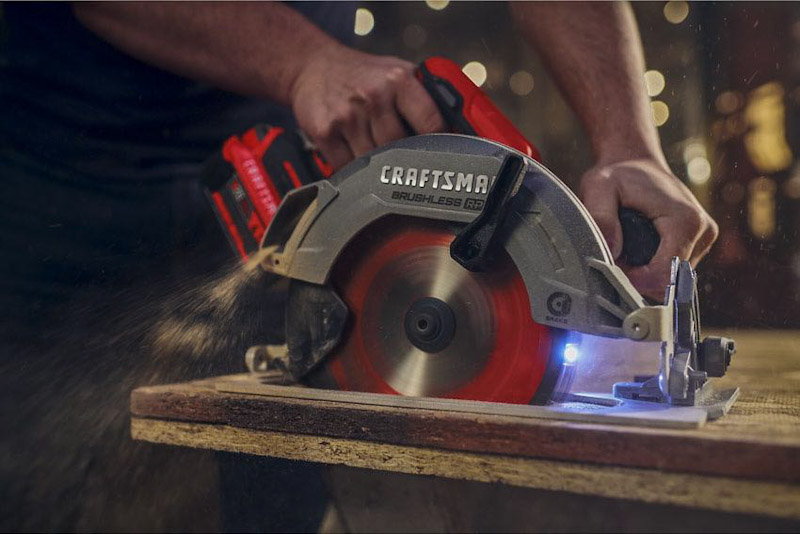
Craftsman CMCS551 (Best Value All-Rounder – $135 Kit) V20 upgrades shine in 2026 with an aluminum shoe and 5,000 RPM torque, ripping OSB in 18 seconds per Pro Tool Reviews. At 8.7 lbs loaded, it’s sturdy for framing without overwhelming new hands.
Pros: Powerhouse value; LED shadow-free line; expandable V20 line.
Cons: Guard sticks on steep bevels; moderate dust ejection.
Full Specs: Max depth: 2-9/16″; Battery: V20 4Ah; Weight w/battery: 8.7 lbs.
Real-World Verdict: Home Depot buyers (4.7/5) rave: “Deck reno hero under $150—feels pro-grade.”
Milwaukee M12 Fuel 2521 (Best for Tight Spaces – $159 Bare Tool) This 5-1/2″ compact evolves with Forge batteries, balancing at 4.7 lbs for attic finesse. Evals show 200 ft of 2x stock runtime, with quick-blade swaps.
Pros: One-handed mastery; 5-year tool warranty; M12 compatibility.
Cons: 1-3/4″ depth limits thick lumber; RPM dips on loads.
Full Specs: Max depth: 1-3/4″; Battery: M12 5Ah ($40 add-on); Weight w/battery: 5.5 lbs; RPM: 3,850.
Real-World Verdict: FineWoodworking forums echo: “Attic renos without bulk—precision in pockets.”
DeWalt 20V Max DCS570 (Best for Precision – $149 Kit) A 2026 staple with electronic brakes and 5,000 RPM, this 7-1/4″ saw weighs 8.2 lbs for controlled detail work. Bob Vila testers loved its one-hand bevel lock.
Pros: Surgical accuracy; dust ports galore; vast 20V ecosystem.
Cons: Heavier for prolonged overhead; pricier extras.
Full Specs: Max depth: 2-9/16″; Battery: 20V 5Ah; Weight w/battery: 8.2 lbs.
Real-World Verdict: Users on Wood Magazine (4.5/5): “Brake saves fingers—perfect for trim newbies.”
Comparative Edge: Head-to-Head Showdown for 2026 Decision-Makers
To cut through choices, here’s a benchmark table from aggregated 2025-2026 tests (cut speed on 2x10s, ergonomics scores out of 10):
| Model | Price (Kit) | Weight (w/Battery) | Max Depth | RPM | Runtime (ft/Charge) | Beginner Score | Top Use Case |
|---|---|---|---|---|---|---|---|
| SKIL CR540601 | $120 | 7.5 lbs | 1-15/16″ | 4,900 | 350 | 9.2 | Trim & Shelves |
| Ryobi PCL400 | $60 | 4.2 lbs | 1-9/16″ | 4,000 | 150+ | 9.5 | Small Repairs |
| Craftsman CMCS551 | $135 | 8.7 lbs | 2-9/16″ | 5,000 | 280 | 8.8 | Framing & Decks |
| Milwaukee M12 2521 | $199 | 5.5 lbs | 1-3/4″ | 3,850 | 200 | 8.7 | Tight Spaces |
| DeWalt DCS570 | $149 | 8.2 lbs | 2-9/16″ | 5,000 | 300 | 9.0 | Precision Cuts |
SKIL leads for holistic novice appeal, per Ronix Tools’ value analysis, while Ryobi dominates portability.
From Selection to Mastery: Step-by-Step Guidance for Your 2026 Purchase and Beyond
Match to Missions: Light trim? Ryobi’s compact edge. Lumber framing? Craftsman’s depth.
Smart Spending: Bundle kits save 20%; scout Black Friday echoes at Lowe’s for $50 off. Factor $40 batteries.
Hands-On Audition: Home Depot demos—feel trigger pull and balance loaded.
Accessory Arsenal: Start with sawhorses ($50), clamps ($20), and earplugs.
Warranty Wisdom: 3-5 years standard; apps like DeWalt’s monitor wear.
Post-tariff stability keeps USA prices steady—opt for American-made blades for 25% sharper longevity. Maintenance mantra: Clean shoes weekly, oil arbors monthly, store at 50% charge. Safety stats? 70% of incidents tie to poor clamps—secure work, don PPE, rehearse on offcuts. 2026’s vibration tech cuts strain further, per Woodworkers Journal.
Epilogue: Your First Cut, Your Lasting Legacy
In 2026, the best cordless circular saw for beginners isn’t merely metal and batteries—it’s the spark that ignites a lifetime of creation. The SKIL CR540601 crowns our list for its forgiving grace, but Ryobi’s PCL400 steals hearts for sheer accessibility.
Whichever you claim, remember: Every master started with a wobbly line. Grab yours via trusted links, chronicle your triumphs in the comments, and let’s build something extraordinary together.